
|
Immune excluded is the largest phenotype in tumors such as colorectal, ovarian, and non–small cell lung cancer |
|
|
Preclinical data show that our lead program may have 5x the efficacy of current treatments |
|
|
The potential market is greater than $70 billion |
 Hear from our president & CEO

Creativity and focus power rational drug design
Our founder, Dr. Michael Curran, is laser focused on cancer. In his early career, he revolutionized the treatment of melanoma by imagining and designing the first FDA-approved immunotherapy combination: CTLA-4 and PD-1 inhibitor, which cured many patients with otherwise terminal disease.
Not willing to stop there, he established the Curran Laboratory in 2012 at MD Anderson Cancer Center with a singular goal: bring the treatment success in immune-inflamed tumors (such as melanoma and lung) to immune-resistant tumors (such as prostate and colorectal). Numerous resistance mechanisms in these tumor types make this a daunting challenge. And yet, systematically, Dr. Curran has identified key resistance mechanisms and crafted targeted therapeutic interventions.
Dr. Curran has set himself apart by utilizing rational drug design to overcome key barriers across therapeutic approaches. This focus, this science, and this vision form the foundation on which ImmunoGenesis is built.
Overcoming immune resistance
Immunosuppressive elements in the tumor microenvironment (TME) mean that many tumors evade treatment and are hidden from cancer-destroying immune cells. Unlike immune-inflamed tumors, where numerous T cells are present in the TME, immune-excluded tumors have immunosuppressive elements that lock out T cells. This distinction is critical, because if T cells are unable to access the TME, treatment with first-generation PD-1 inhibitors is not effective.
The immune-excluded subtype is the largest immune phenotype in tumors such as colorectal, ovarian, and non–small cell lung cancer, and across tumors, it consistently represents a larger proportion of patients versus immune inflamed. Because immune-excluded tumors have unique immunosuppressive characteristics, first-generation immunotherapies have not been able to show efficacy in these cancers.
While traditional approaches and new combination treatments for many cancer types continue to disappoint, ImmunoGenesis is revolutionizing treatment for immune-excluded tumors. With a deliberate drug development strategy based in these tumors’ pathology type, we are creating sophisticated therapies that target key mechanisms of immune resistance.
Our team set out to develop a cytotoxic immune checkpoint inhibitor (ICI) that could be effective as a monotherapy in immune-excluded tumors. We started by targeting the ligands of PD-L1 and PD-L2—rather than the PD-1 receptor—which allowed effector function to be built into the molecule. The goal is to kill the immunosuppressive elements in the TME and facilitate efficacy in immune-excluded tumors.
We worked with an innovative antibody design company to create a first-of-its-kind, dual-specific antibody in which both arms bind with clinically relevant affinity to PD-L1 and PD-L2. It took multiple rounds of affinity maturation and more than 3 years to generate an antibody that met our efficacy standards. Our lead program, IMGS-001, is a cytotoxic ICI, engineered with killing function to clear out immunosuppressive elements in the TME and allow T cells to infiltrate. In addition to the cytotoxic function, this molecule has optimal PD-1 pathway blockade to activate the newly infiltrated T cells to attack and destroy tumor cells previously protected from immune attack.
Our second clinical program is a hypoxia-reversal agent and primer for enhanced immune checkpoint inhibition in the treatment of immune-excluded tumors. Immune T cells typically do not enter hypoxic zones. By reoxygenating the TME, IMGS-101 (evofosfamide) frees T cells to traffic to the tumor and attack cancerous cells once checkpoint signals are blocked.
Dig into our science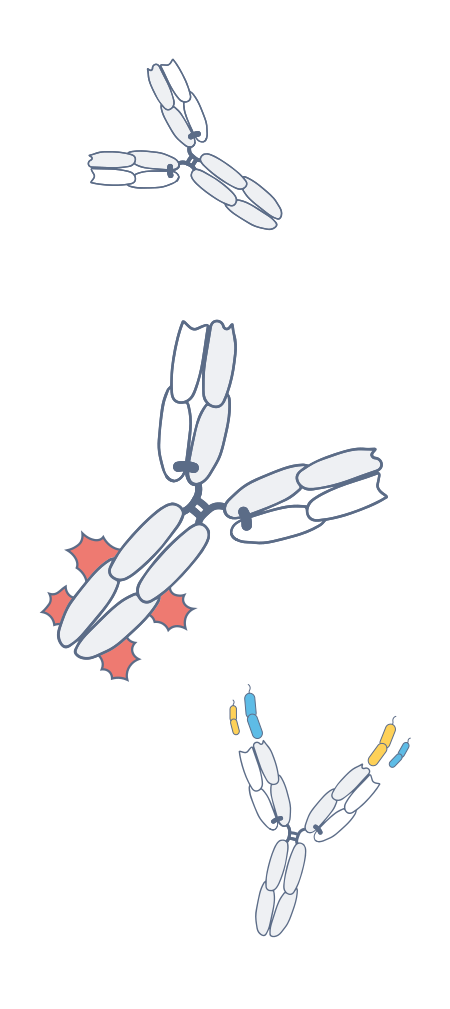
We are just getting started
The next several years are going to be exciting. We have several programs in the pipeline and a vision for bringing them to life.
Take a look
Contact Us
For more information, email info@ImmunoGenesis.com or complete this form:
Stay on top of what’s happening
Check out our latest
